Something subtle but important is happening to Digital Marketing in 2026, especially when it comes to visibility.
Brands aren’t really competing for rankings anymore. They’re competing for presence. The kind that shows up inside AI answers, social feeds, buying conversations, and private decision loops where no one clicks anything at all.
In 2026, being “discoverable” doesn’t mean you rank first. It means you’re recognized when a question is asked. By a model. By a platform. By a human who’s already halfway to a decision.
That’s why so many smart teams feel uneasy right now. They’re doing the work. Publishing consistently. Investing in content, video, social, email. And still, visibility feels fragile. Temporary. Hard to pin down.
The problem isn’t effort. It’s structure.
Modern discovery is layered. Attention is earned before traffic. Trust is built before conversion. And signals travel across systems that don’t behave like Google ever did.
Once you see visibility this way, the trends stop looking random. AI summaries, zero-click search, creator-style brands, community-led growth, employee advocacy, social-as-search. They’re not separate shifts. They’re expressions of the same underlying reality.
Visibility in 2026 isn’t a single tactic.
It’s a stack.
And the brands that win are the ones building all of it intentionally.
Key Takeaways:
- Digital marketing in 2026 is no longer driven by rankings or clicks. Visibility now happens inside AI-generated answers, social feeds, and conversations where users often never visit a website.
- Search has become a behaviour, not a destination. People discover products and expertise across TikTok, YouTube, LinkedIn, forums, and AI tools, not just Google.
- AI systems now act as gatekeepers. They select, summarize, and cite content based on clarity, structure, and trust, not just SEO signals.
- Structure determines what gets surfaced. Answer-first formatting, scannable layouts, and searchable language are now prerequisites for visibility.
- Authentic, experience-led content outperforms polished brand messaging. Clear explanations, real use cases, and human opinions are more likely to be reused and cited.
- Success is measured by visibility, not traffic. Mentions, AI citations, content reuse, and presence at decision moments matter more than clicks alone.
- The brands that win in 2026 design for systems, not channels. They build presence, structure, trust, and signals together, so visibility compounds even in zero-click environments.
How Discovery Really Works in 2026
Search is no longer a place. It’s a behaviour. People still search. They just don’t agree on where that happens anymore. A skincare question starts on TikTok. A software comparison lives on YouTube. A B2B buying decision unfolds across LinkedIn threads, videos, and comments. Younger audiences treat social platforms as search engines by default, but this isn’t limited to Gen Z. Decision-makers now use social content to validate expertise, watch real walkthroughs, and see how a product performs in context, not in ads. Platforms have adapted accordingly. TikTok nudges users toward search-style queries. YouTube prioritizes educational and comparison content. LinkedIn surfaces how-tos and opinionated threads over polished brand updates. The shift is subtle, but important. Search is no longer about finding pages. It’s about finding proof, perspective, and usefulness, wherever that happens to live. Might interest you: The Ultimate GEO Guide 2025: How to Win in Generative SearchAI engines are the invisible gatekeepers
Layered on top of this is AI. Google AI Overviews, Perplexity, ChatGPT, and similar tools increasingly act as intermediaries. They don’t just rank content. They select, summarize, and cite it. These systems pull from:- Blog posts
- Videos and transcripts
- Social posts and threads
- Forums and Q&A content
Why Traditional Digital Marketing Playbooks Are Failing
For years, success was simple to explain. Rank higher. Drive traffic. Optimize conversion rates. Repeat. In 2026, that model breaks down. Clicks are disappearing, not because content is worse, but because answers are delivered earlier. Social feeds satisfy curiosity. AI summaries collapse research into a few lines. And users move on without ever opening another tab. This creates a dangerous illusion. Traffic goes down, so teams assume performance is slipping. In reality, visibility may be increasing, just in places traditional analytics can’t see. There’s a second failure too, quieter but just as costly. Brands that still show up like brands, polished, promotional, and overly produced, increasingly get ignored. The content that performs now feels closer to a creator explaining something clearly than a campaign trying to impress. It’s not that people hate marketing. They just don’t tolerate being sold to when they’re trying to learn.The Core Shifts Defining Digital Marketing in 2026
1. Social becomes the first layer of search
Social platforms are now where questions are asked and answered. This means content must be:- Searchable in-feed
- Structured for quick understanding
- Native to how people actually phrase questions
2. AI is embedded, not experimental
By 2026, AI is part of every content workflow. It helps generate scripts, variations, captions, edits, and repurposed formats at scale. Used well, it removes friction. Used poorly, it creates sameness. The brands that win don’t let AI decide what to say. They let it help say things faster and more consistently. There’s a difference, and audiences feel it immediately.3. Authenticity outperforms production value
Highly produced content still has a place. Awareness campaigns need polish. But engagement, trust, and reuse increasingly come from content that feels human. Lo-fi video. Direct explanations. Opinions backed by experience. This matters not just for people, but for AI systems too. Content that is clear, specific, and grounded in real use cases is easier to extract, summarize, and cite than vague brand messaging.4. Community and listening become growth engines
Listening is no longer just moderation or reputation management. Brands that treat comments, replies, and feedback loops as live intelligence gain an edge. Social listening surfaces micro-trends, product friction, and shifting expectations long before reports catch up. Responding publicly and thoughtfully builds credibility. Acting on feedback builds loyalty. Silence, in 2026, reads as disinterest.What Actually Drives Visibility When Clicks Disappear
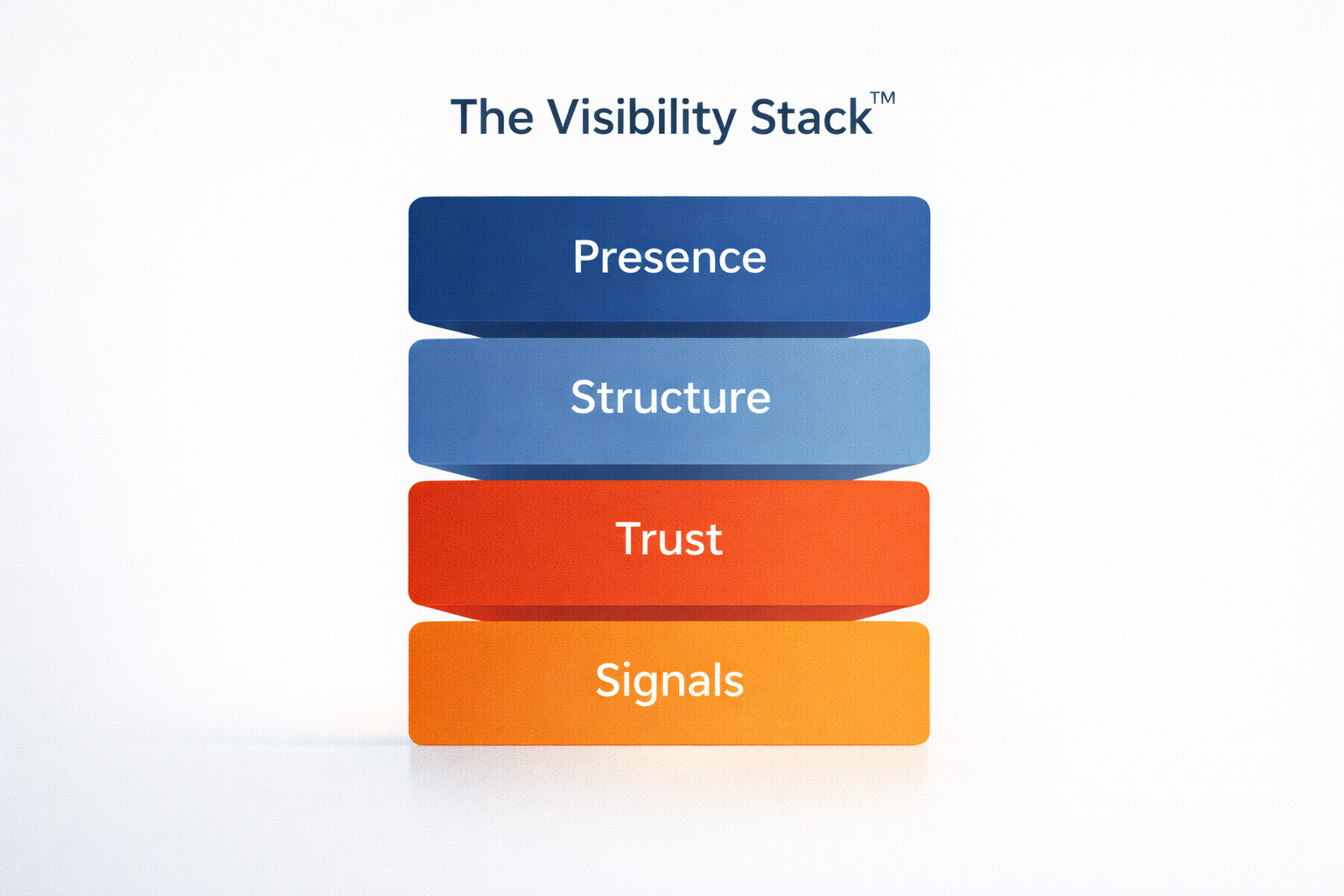
In 2026, visibility is no longer measured by traffic alone. It’s measured by whether your brand shows up inside answers, not just behind links. This shift can be understood using the Visibility Stack Framework, which explains how content earns attention across social platforms, AI search engines, and zero-click environments.The Visibility Stack: How Brands Get Discovered in 2026
Presence Visibility starts with being present where questions are asked. That now includes TikTok, YouTube, LinkedIn, forums, and AI-accessible content sources, not just traditional search results. If your content doesn’t exist in these spaces, it cannot be surfaced, cited, or summarized. Structure Content must be easy to understand and extract. AI systems and social algorithms prioritize clear questions, direct answers, scannable formatting, and searchable language. Content that lacks structure may still be published, but it is rarely selected. Trust When multiple answers exist, AI engines and users filter for credibility. First-hand experience, consistent expertise, clear viewpoints, and transparent communication increase the likelihood that content is reused or cited instead of ignored. Signals Over time, visibility compounds through signals such as AI citations, brand mentions, content reuse, and engagement depth. These signals confirm relevance and influence, even when no click occurs. Might interest you: The Ultimate AEO Guide 2025: Dominate Zero‑Click SearchWhy Traditional Metrics No Longer Tell the Full Story
Clicks and impressions were once proxies for attention. In 2026, they are incomplete. What matters more is visibility without interaction, including:- Mentions in AI-generated summaries
- Brand references in social discussions
- Content that is paraphrased or reused across platforms
- Presence at key decision-making moments
The Visibility Stack™ (for 2026)
The Visibility Stack is a four-layer model that explains how brands earn attention, trust, and influence in 2026, across social platforms, AI search engines, and zero-click environments. Brands that optimize only one layer may still publish content, but they don’t consistently get discovered or cited.
Layer 1: Presence
Where your content exists.- Social platforms (TikTok, YouTube, LinkedIn)
- Blogs, videos, newsletters
- Forums, communities, comment threads
Layer 2: Structure
How easily your content can be understood and extracted.- Clear questions and answers
- Scannable formatting
- Searchable captions and titles
- Answer-first content design
Layer 3: Trust
Why your content is selected over similar answers.- First-hand experience
- Clear opinions
- Consistent topical focus
- Transparent, human voice
Layer 4: Signals
What confirms your relevance over time.- Mentions and citations in AI summaries
- Reuse across platforms
- Engagement depth, not reach
- Visibility at decision moments
How to Structure Content for Search, Social, and AI at the Same Time
Answer-first content architecture
AI systems and human scanners behave similarly. They look for clarity early. Effective content in 2026:- Uses real questions as section headers
- Answers them directly in the first few sentences
- Expands with context, examples, and nuance afterward
Structured creativity
Creativity still matters. It just needs scaffolding. Headings, spacing, step-based layouts, and visual clarity help both algorithms and people understand what you’re saying quickly. Captions should read like short articles, not throwaway copy. If something is hard to skim, it rarely gets surfaced.Why structure now beats cleverness
Clever ideas that aren’t clear don’t travel. Algorithms reward comprehension. AI extracts what it can parse. Audiences share what they understand. Structure is no longer a constraint. It’s a multiplier.Repurposing as a System, Not a Tactic
Most teams say they repurpose content. Few actually do it well. A real system starts with one strong idea, not five weak ones. That idea becomes:- A long-form article
- A short explainer video
- A carousel or thread
- A newsletter section
- A searchable answer on social
Trust, Authority, and the Human Signal in an AI World
AI systems don’t just evaluate relevance. They filter for credibility. Signals that increase trust include:- First-hand experience
- Clear opinions
- Consistent topical focus
- Transparent use of technology
- Proof over promises